I always wondered whether the noses and minds behind classic fragrances such as ShalimarNº5PoisonOpiumCK One etc. had any inkling that these creations would be considered as masterpieces. Did they know they were making history at the time? Or was it years later that the classic status was bestowed upon them? If so, how quickly did this happen? I think the answer varies but the moniker of classic is something that is most often awarded in hindsight and it really is the test of time that is the true decider.

We can, I think, see fragrance history in the making and it’s easy to point to a number of creations over the last decade or so that have quickly become modern classics. These are scents that have broached entirely new olfactory ground and have become hugely popular because they smell so entirely unique. I’m talking about fragrances such as Maison Francis Kurkdjian’s fiery marine Baccarat Rouge 540, Le Labo’s crystalline woody Santal 33, and of course, Marc Antoine Barrois’ spacially ethereal Ganymede.

Ganymede comes from a creative partnership between couturier Marc-Antoine Barrois and perfumer Quentin Bisch. They speak of their kinship as part of this creative synergy and how it has helped translate Marc-Antoine’s emotions and imaginations into olfactory art. Ganymede is described as a fantasy, one inspired by the moon of Jupiter and the Trojan prince from which the satellite takes its name. That all may sound a little bit abstract, but Ganymede is an abstract, cerebral fragrance that presents an entirely new olfactory experience. Is it destined to be a classic? Well, I think the answer to that is incredibly simple: it already is.

In this review I’m sniffing Ganymede in both its Eau de Parfum and Extrait concentrations. Two perfumes born from the same creative spark but with completely different points of view.
Let’s Sniff!

2016-11-25 21.56.17

Over the coming weeks I’m going to be sharing my top five fragrances from some of my favourite perfume brands in a series I’m creatively calling “Top Five”…

CHANEL – just the word evokes luxury, simplicity, and abstraction. When I think of CHANEL I think of quality – beauty presented without fuss or gimmick. The fragrances have a purity to them – a clarity that is instantly recognisable as CHANEL. Remember, this is a brand that is responsible for launching the most famous fragrance in the world, a bottle of which sells every 30 seconds. Perfume and CHANEL are linked together in the same way that couture and CHANEL are. They are symbiotic and I tell you what, they have some utter crackers in their collection.

Here’s my top five CHANEL fragrances.

IMG_4565

I feel as if Les Infusions de Prada best showcases the DNA of the Prada brand. It was Infusion d’Iris, the genesis of the collection, that really birthed that inimitable Prada signature that is now so familiar. This Prada trademark is the result of the fusion of two materials; iris and benzoin, both of which come together to create a fizzy, powdery, grey and sweet, gauzy aroma that is so luxurious and so ‘Prada’. It’s glorious and to be found front and centre in the brand’s many infusions.

Speaking of infusions, the latest to join the collection is Infusion de Mandarine, a fragrance that seeks to distil the essence of mandarin and merge it with that Prada signature. Created by perfumer Daniela Andrier, who is responsible for most (if not all) of the Prada fragrances, Infusion de Mandarine presents a cacophony of orange notes wrapped together in a little juicy package. This may look like an unassuming citrus on the surface but boy, it is anything but!

IMG_2884

The most fascinating aspect of perfumery is the building blocks – the familiar (and often unfamiliar) materials that come together to create something entirely new. For me, I am endlessly beguiled by the way in which a singular material can, not only be so versatile in its use, but also add nuances to a fragrance that are so far removed from the material when experienced in isolation. One could call this magic, but it’s not, it’s chemistry, and perfumery is a fusion between art and science, where the latter is used to convey meaning and emotion from the medium of smell.

For me it’s always been the synthetics that hold more interest than the naturals. Without synthetic materials (incl. isolates, captives and aroma chemicals) modern perfumery would smell a heck of a lot different. We just wouldn’t have the perfumes that we’ve had for the last 100 years or so – what we’d have is inconsistent naturals that, due to their own density and complexity, often lead to an opaque soup when blended together. Synthetics give the space and definition to these materials allowing them to compliment, contrast and extend each other. They pull the naturals apart and bring new dimensions into play.

One of my favourite synthetic materials is Ambroxan. OK, so it’s not a fancy material, nor is it a particularly expensive one. It doesn’t take 3,000 years to mature under moonlight on an exotic island. No, it doesn’t have to be expressed from the anal glands of unicorns (perfumery has always had a weird fascination with the contents of animal butts, tell me I’m wrong) by golden-locked virgins in the dead of night. But it is an incredibly useful and popular material, and it finds way into many modern fragrances in both prominent, and stealthy ways. I see it as a bit of a ninja – it swoops in quietly, bringing dimension and space to dense compositions allowing them to expand, giving them tremendous lift but also a fascinating mineral facet. To put it simply, Ambroxan is ‘the nuts’.

IMG_2775

“I am free” says Perfumer Christine Nagel as she sits comfortably in the handsomely furnished apartment above Hermès’ New Bond Street store in London. Nagel is here to talk us through the five new fragrances she has created as in-house Perfumer at Hermès. The five are her first additions to the Hermessence collection, a series of olfactory haikus created by her predecessor Jean-Claude Ellena. Nagel’s style is somewhat different from Ellena’s – his domain was of watercolours and minerals, wrapped in cerebral, thought-provoking compositions that birthed the Hermès olfactory signature. If Ellena created this signature, then Nagel’s has opened it up to a new-found richness with her more immediate, grander and more voluptuous style. Despite their stylistic differences, the creations by both Ellena and Nagel are undeniably ‘Hermès’ in every way.

Anyway, back to freedom. Christine Nagel has full creative freedom at Hermès and with it she has chosen to create a collection of five oriental fragrances to add to Hermès iconic Hermessence collection. Nagel wanted to return to “the origins of perfumery” to create three Eau de Toilettes and two oil-based Perfume Essences. According to Nagel, when she proposed this to the CEO his answer was simply ‘yes’. So off to the origins of perfumery Nagel travelled, focusing on the noble and historic notes of myrrh, musk, agar wood and cedar, with which she has created five distinct fragrances that celebrate the styles of the orient in a way that is truly and faithfully ‘Hermès’.

IMG_2387

I’m always crushing on something scented or other. My nose knows no limits. Candy Crush is where I showcase the beautifully scented things I’m crushing on right now so you can hopefully develop a crush too.

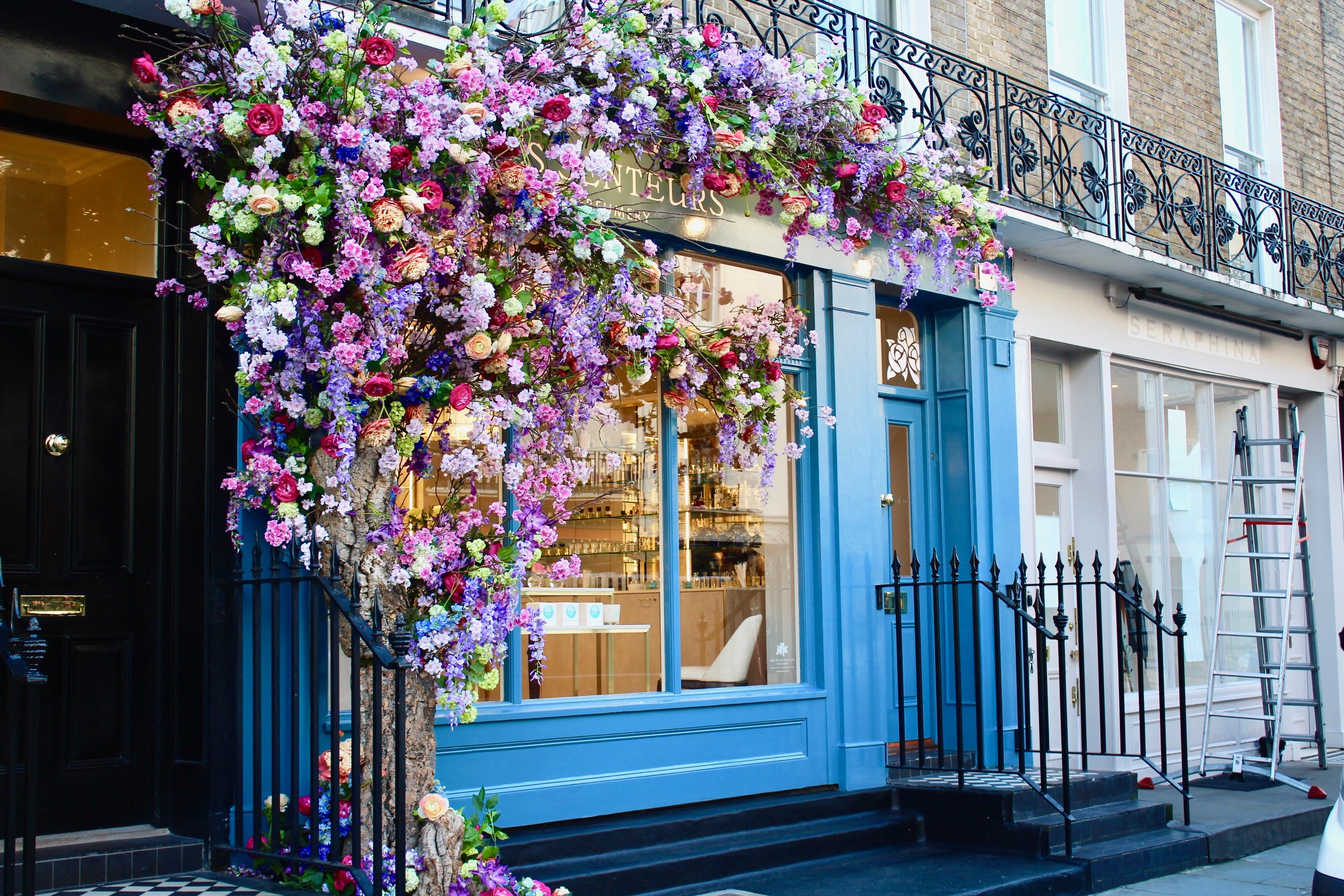
Les Senteurs is a landmark. It’s not just a perfume boutique, it’s THE perfume boutique. For perfume lovers it’s not just a destination for the best niche brands out there, it’s an institution of the perfume world. The selection of perfumes at Les Senteurs is finely curated and since the boutique opened its doors in 1984 (they’ve been around longer than I’ve been alive!) they’ve been responsible for many ‘firsts’, being the first boutique to stock a number of brands in the UK, such as Editions de Parfums Frederic Malle. So Les Senteurs is an important pin on London’s perfume map, but it’s also a joyful experience – a tranquil haven where one can browse beautiful scents in peace with expert guidance.

You’re probably wondering why I’m just now, crushing on a perfume boutique that has been in existence since 1984 and it’s true, my crush on Les Senteurs has been holding strong since my very first visit 10 or so years ago. But I crush especially hard today because Les Senteurs has just had a bit of a facelift and I have to say, for 34 years old, Les Senteurs is looking damn fine. The Seymour Place boutique has now closed, which leaves the original store in Elizabeth Street as the flagship, in which the flag for niche fragrance is flown gracefully and proudly.