This coming Monday (21 March 2016) is National Fragrance Day – a day set aside for us to observe and appreciate the worlds of fragrance and smell. So how can you celebrate this smelly day? Well, one way is to join The Perfume Society in sharing a ‘Smellfie’ on Twitter, Instagram or Facebook.
Second question, what’s a ‘Smellfie’? Well, I’m glad you asked! A ‘Smellfie’ is a selfie with a bottle of perfume thrown in for good measure. The scent you choose to take a selfie with can be your favourite or simply the fragrance you have chosen to wear on the day – the choice is yours.
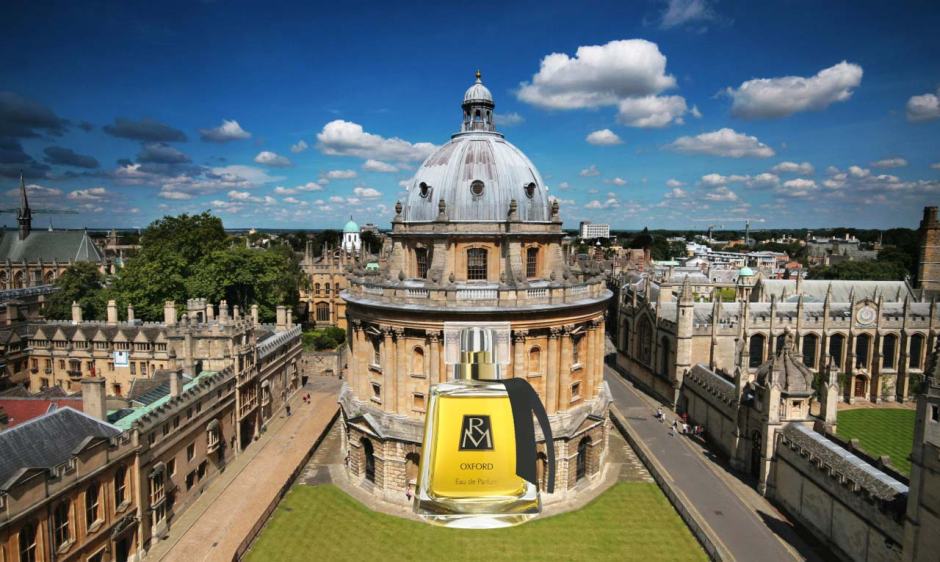
I feel like we’re going from the ridiculous to the sublime with fragrance reviews on The Candy Perfume Boy this week. We started with Frédéric Malle’s Monsieur., which whilst fabulously composed is almost comically butch (which in my world is a compliment, of course) and yet we finish with Ruth Mastenbroek’s Oxford which is an entirely more refined and subtle affair. The two fragrances are so different in fact, that a comparison would be silly, so let’s move on and focus solely on Oxford.
Oxford is Ruth Mastenbroek’s third fragrance and it’s a unisex scent inspired by the perfumer’s time spent studying at Oxford University. It’s classified as an oriental, but as one would expect from a fragrance inspired by an established British institution, this is far from an East-looking perfume, in fact it takes the familiar notes of this fragrance family and spins them into something hopeful and free-spirited, just like one’s university days. The official description of Oxford is as follows:
“…inspired by my experiences at Oxford University, where I studied chemistry at Lady Margaret Hall. The scent of the French cigarette brand Gitanes, with its connotations of other-worldly chic and sophistication, was new to me as an innocent undergraduate. It came to embody for me the moment of discovery- when you realise you can make your own mistakes, your own choices, and discover life’s extraordinary adventure. I describe Oxford as the scent of an awakening.”
I’ve been taking a lot of walks recently. To me, there’s no better antidote to a head cluttered with thoughts than an aimless ramble around a scenic area. With each step the mind clears, allowing one to appreciate the things outside themselves; the trees, the wildlife, the biting embrace of a crisp March breeze and of course, the many smells that add that extra layer of feeling to the experience. I’ve often said that smells are the unseen textures and colours of the world. They add the fourth dimension to what we see, touch and hear, leaving stamps in our memory that can be drawn upon years later, to allow any experience to be relived in vivid detail.
It was on one of my recent walks that I came across a familiar smell. It was an odour that I instantly recognised but hadn’t smelled in such a long time: the smell of chimney smoke. First things first, some context for you. I grew up in a tudor cottage in a small village in the middle of buttfucknowhere. The house is what I would call ‘shabby chic’ but with little chic and an extra helping of the shabby. As pretty as it may have been from the outside it was well-lived-in from the inside, but the most important thing to note was the lack of central heating, with only a wood burner to be relied on to provide warmth. Now, there were a few of downsides to this, but none more notable than the fact that it was cold most of the time, and when I say cold, I mean real cold, like the Clinton bedroom after the Lewinsky scandal cold.
Yesterday at a ceremony held at BAFTA in London the winners of the 2016 Jasmine Awards were announced. As the longest standing awards within the fragrance industry, the Jasmines, hosted by The Fragrance Foundation, celebrate excellence in fragrance writing for pieces both in mainstream press or independent titles. This year’s winners were an eclectic group and are as follows:
Retro Machismo – Monsieur. by Editions de Parfums Frédéric Malle
“Monsieur., your chest rug is peeking through your shirt.”
“Monsieur., would you like the bear skin rug dry cleaned before you lie seductively upon it?”
“Monsieur., the 1970s called and they would like their headshop back.”
“Monsieur., is that an afro comb in the pocket of your flares or are you just pleased to see me?”
These were my initial thoughts when smelling ‘Monsieur.‘ the latest release from Editions de Parfums Frédéric Malle. As you may be able to tell, it’s somewhat of a retro macho bomb and style wise, it certainly comes across as somewhat of a departure from Malle’s ultra-modern aesthetic. That said, I find it to be fabulously retro, which is to say that it celebrates a moment in time and a certain type of machismo that is utterly classic: that of the hairy chested, suave yet roguish animal of a man, or in this case a slightly older man. Wait, is Monsieur. a DILF?!
Monsieur is the second outing at Editions de Parfums Frédéric Malle for perfumer Bruno Jovanovic, the man behind the delightfully subversive Dries Van Noten par Frederic Malle and designer scents such as Calvin Klein Reveal. With Monsieur., Jovanovic tackles patchouli, a staple ingredient within the world of perfumery that has made many a fragrance a classic. The thing with patchouli though, is the fact that it feels a bit old fashioned. It’s still used in perfumery today, of course, but most examples of the note today show it as sanitised to nothing but a dark fuzz that adds texture to the composition. Gone is that dirty, earthy and oily melange that we knew as patchouli in the 1970s and 1980s. Monsieur. however, aims to pay homage to the multi-faceted and complex nature of this ingredient and the perfumes of yesteryear, with over 50% of its composition comprising of patchouli sourced through molecular distillation. As the brand puts it; “Monsieur. is to patchouli what Carnal Flower is to tuberose”.
So Monsieur. is a patchouli weapon – a tool for seduction for the man suave enough to wield its powers responsibly. As Persolaise noted in his review, it’s also a fragrance that looks backwards rather than forwards, making it an interesting step in the Editions de Parfums oeuvre. Although evocative, I’m sure my description of Monsieur. as a somewhat-attractive paternal figure may not be what the brand intended, I shall therefore, refer you to the official description as per Editions de Parfums Frédéric Malle:
“Although seemingly simple, this formula evokes for Frédéric Malle, since its genesis, remorseless seducers such as Alfonso de Portago, Mark Birley, Jose-Luis de Villalonga or Gianni Agnelli. Their manly and timeless elegance has relentlessly guided the development of this empowering perfume. Monsieur., a neo-classical perfume, manly and utterly elegant. Monsieur.”
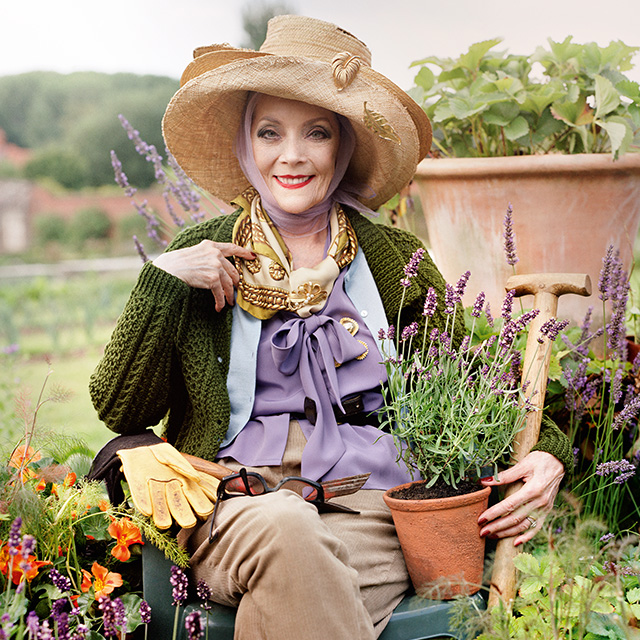
Each year, Jo Malone London presents us with a limited edition collection of five or so scents on a particular theme. In the past we’ve been treated to afternoon tea with beautiful delicacies such as Grapefruit & Assam and Sweet Milk, not to mention the gorgeous London Rain collection which included the amorphous Rain & Angelica, which is one of their most unique fragrances to date. It’s always exciting to see what the brand will do next and where the eccentrically British streak will take them. This time their quirky sensibility sees them walking children in nature, specifically in their very own herb garden.
The Herb Garden collection consists of five fragrances, each of which pairs two notes found within your typical British garden, all served in the traditionally eccentric style of the house. Each scent was created by the perfumer Anne Flipo (L’Artisan Perfumer’s La Chasse Aux Papillons and Chloé Love Story) in her first collaboration with Jo Malone London. Each fragrance is billed as presenting freshness with a distinct personality, evoking the wildness of the herb garden. On a side note, completely irrelevant to the scents, can we just give a big bravo and round of applause to Jo Malone London for utilising the ever so fabulous older model in the campaign image above? More of this please, perfume industry! Anyway, back to the scents themselves…
“A day in the herb garden. A quirky tapestry of fragrant foliage, entwined with flowers and fruit. Satisfying stems of fresh English lavender. Overflowing pots of spicy nasturtium and leafy clover. Lemon thyme crushed in soil-covered hands. And cool earth encasing ripening carrots and fennel. The aromatic artistry of herbs; verdant, crisp, juicy and sweet. A captivating and delectable collection.”
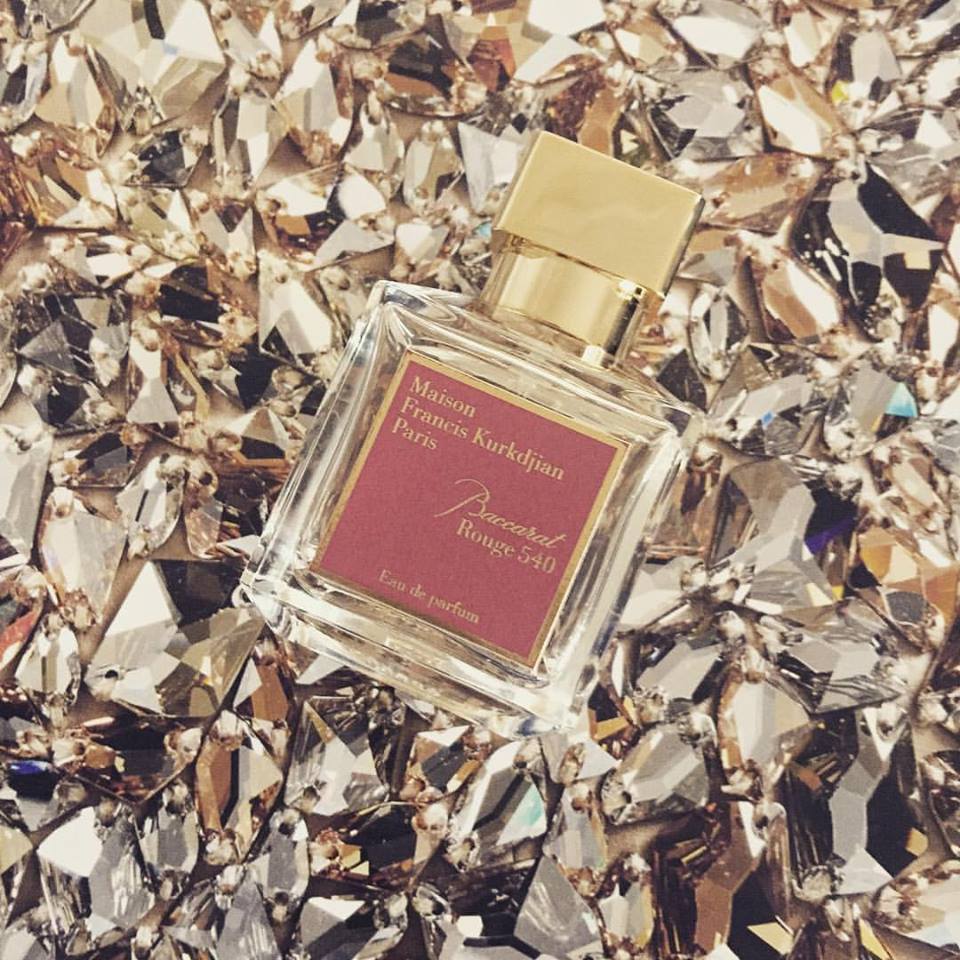
One could argue that Francis Kurkdjian, the enfant terrible of the perfume industry, is not averse to playing with fire. He regularly crafts bold creations and dares to tread where many other perfumers do not. I truly believe that he is one of the great perfumers of modern times, up there with the likes of Dominique Ropion and Jean-Claude Ellena. The work he does for designer brands is often bold and trend-setting, resulting in many of the modern classics we revere today, fragrances such as Jean-Paul Gaultier’s Le Mâle and Narciso Rodriguez for Her. For his own brand, Kurkdjian crafts accessible designer-style fragrances with high quality materials, elevating the genre to its highest point. His latest creation, Baccarat Rouge 540, feels like a departure from his radiant MFK style and is instead, an essay in contrasts, olfactory shocks and unconventional luxury. It serves as further proof that he is at the cutting edge of the industry and the very top of his game.
Baccarat Rouge 540 came into being in 2014 when Kurkdjian was approached by the legendary crystal maker to create a limited edition fragrance housed within an exquisite Baccarat crystal flacon (you can see that here). The Baccarat Rouge 540 we see today is the much more affordable, but still rather luxurious, Eau de Parfum incarnation. For his inspiration, Kurkdjian looked to the house’s signature red crystal, a colour that features in many Baccarat designs, with one red crystal included within each and every chandelier since 1987. It is the red crystal of Baccarat that this fragrance presents in olfactory form.
The fragrance is crafted around three accords, each of which celebrates an integral facet of the manufacturing process for Baccarat crystal: mineral, fire and craftsmanship. Kurkdjian stated that he wanted to create a “graphic” fragrance that represents both the density and transparency of crystal, and also the modernity of the brand, which is moving back into the fragrance market following an extended break. This is a fragrance that Kurkdjian created to be representative of the future and that is exactly what he has done, “starting from the dry down and building up like a house of cards”, a perfume that is entirely new and positively futuristic.
For the first few years of my life, my siblings and I were subjected to appalling hair cuts. I’ll put it simply: we rocked the ‘bowl cut’, so much so in fact, that my older brother and I earned the nicknames ‘Bobby Bowler’ and ‘Baby Bowler’ respectively. Good times. Our dear parents hired a family friend to cut our hair at home and she was lovely however, her one sticking point was that she wasn’t particularly good at hairdressing and my parents didn’t have the heart to seek alternative services in hairography for their ever-growing brood. Blast them!
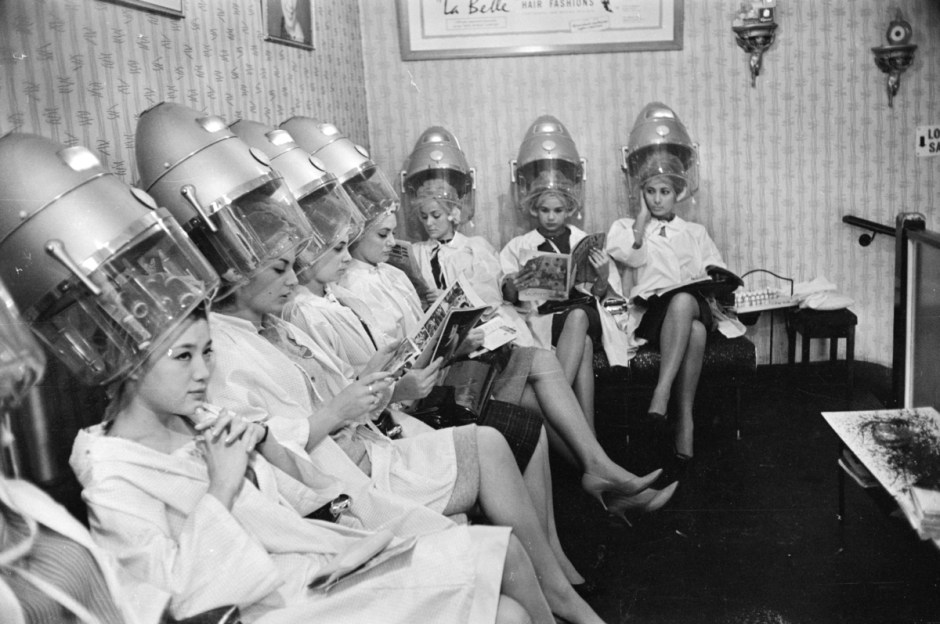
As we got older, bowl cuts simply would not do and we berated our parents into allowing us to attend a proper hairdressers – a hairdressers I should note, that my mother had been frequenting for years. No bowl cuts for mummy, no sir. So off we went to the local hairdressers to find a hairstyle that was a little less, well, horrifying, and we were wowed by the sensory overload that was to be found there: the sound of hairdryers and chatter, and many a strange smell (I now know that one of these smells was the gloriously eggy and cat wee-redolent perming solution). It was brilliant.
“Think of a famous French perfume from the previous century and it will undoubtedly a chypre”
– Heeley
No perfume genre has had a harder time assimilating into the 21st century than the chypre. Often seen as the steely-eyed, stoic bastions of complex perfume personalities, the chypres of the world, take time to love. Established in 1917 by François Coty, the chypre genre has long been associated with the classics of French perfumery but can now seem dated, harsh and too complicated to understand. Personally I love a chypre. I adore their often standoffish nature and on the flip side, their sometimes cuddly, fuzzy hearts.
The problem with chypres is not that they are old fashioned, far from it in fact, the classic chypres are positively wonderful, no, the problem is that perfume houses don’t want to make them any more and when they do, we end up with something that is too sanitised, too pretty and ultimately not a chypre. The 20th century was the domain of Guerlain’s Mitsouko and Carven’s Ma Griffe whereas in the 21st century we have Idylle…
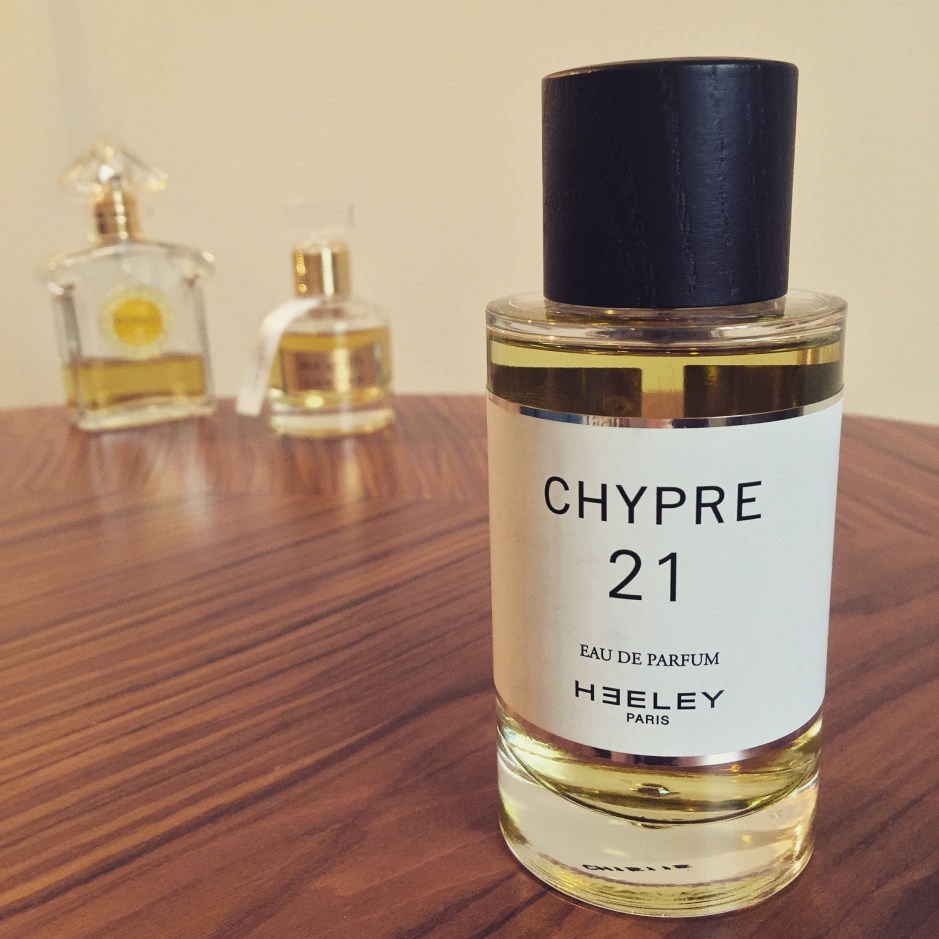
For his latest launch, Chypre 21, perfumer James Heeley intends to drag the chypre into the 21st century whilst paying homage to the classics of the genre. He wanted to create “an ode to Parisian chic” in the form of a “contemporary unisex fragrance” that takes all of the requisite building blocks of a chypre – bergamot, rose, patchouli, oak moss and sandalwood – but modernises them into something altogether more befitting of today. The result is both nostalgic and forward thinking.





 The Candy Perfume Boy