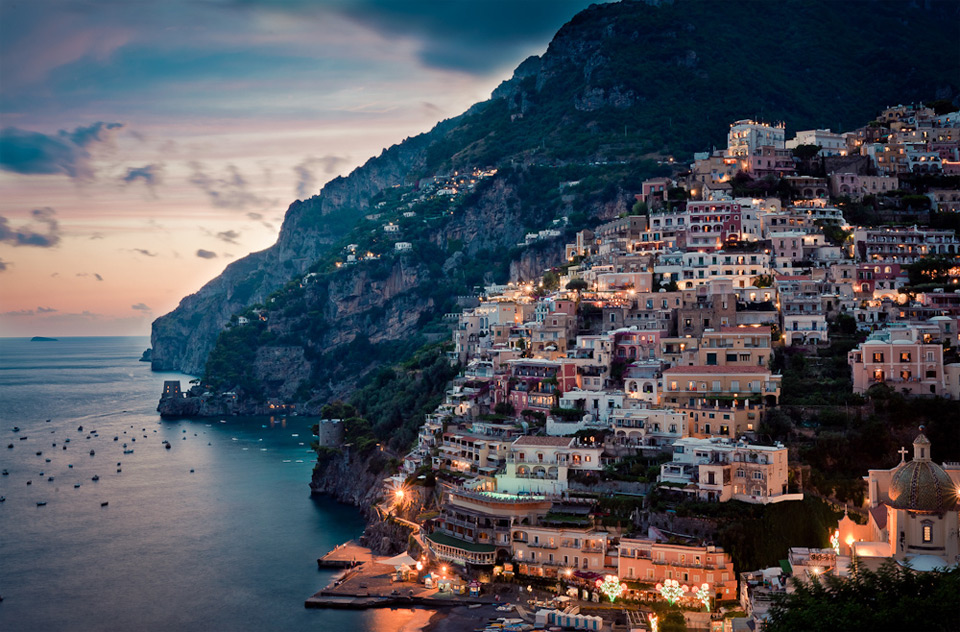
Eau d’Italie really have it made as a brand. I mean, creating fragrances inspired by their native Italy, specifically the phenomenally gorgeous coastal town of Positano (where they own and run the famous Le Sirenuse hotel), really gives them a lot of beauty to work with. Besides, the Italian way of life is incredibly attractive, one can’t help but want to own a part of that, even if it just an olfactory representation.
For their tenth perfume – ‘Acqua Decima’ (Tenth Water), Eau d’Italie have roped in the talents of perfumer Alberto Morillas (Mugler Cologne, Penhaligon’s Iris Prima and Salvador Dalí Parfum de Toilette) to create a perfume that celebrates “the spirit of Italy itself”. The result is a perfume that, as Eau d’Italie puts it; “reflects the sunniest feelings we have inside” but also perfectly captures a way of life in a bottle.
Dries van Noten is a belgian fashion designer described aptly by the New York Times as “one of fashion’s most cerebral designers”. Frédéric Malle is a fragrant curator who collects perfumers, allows them to take centre stage and gives them the creative freedom they need to shine.
Although both men come from different worlds they share a thirst for innovation and appreciation of beauty in all forms so it is no surprise that these two creative forces would collide. Their collaborative efforts have seen the birth of a truly new fragrance, one that positively shows that when done right there is nothing better than when perfume meets fashion.
The fragrance they have created with perfume Bruno Jovanovic is the first in Malle’s new line of fragrances; ‘by Frédéric Malle’. Intended as an “olfactory portrait of the world of Dries van Noten”, the fragrance captures the essence of erudite fashion in a high-art manner whilst feeling distinctly ready-to-wear.
There is a song on Jay-Z’s latest album entitled ‘Tom Ford’, and in said song Mr Z raps the line; “I don’t pop molly, I rock Tom Ford.” Well much like our good friend Jay-Z, I too am not one for recreational drug use and also have somewhat of a penchant for the offerings of American fashion designer Tom Ford – who knew we’d have so much in common?
Unfortunately that is where the common ground ends and unlike Jay-Z I do not have the adequate finances to rock any Tom Ford clothing (oh but how I wish I did), however my budget can certainly stretch to the designer’s olfactory offerings and like many others I have found there to be a number of sniff-worthy perfumes residing within the Tom Ford corner of the department store.
Mr Ford is relatively active on the olfactory front with two lines of perfume to choose from – the widely available and reasonably priced ‘Signature Collection’, which contains the likes of Black Orchid, Violet Blonde, Sahara Noir, Grey Vetiver and Noir; and the more exclusive and definitely pricier ‘Private Blends.’ Personally, I have found more love for the perfumes in the Signature Collection (much to the relief of my partner and bank balance), however the Private Blend certainly has more than its fair share of gems, which leads me nicely onto Tom Ford’s latest collection – ‘Atelier d’Orient.’
The Atelier d’Orient Collection is inspired by; “the sublime beauty, enigmatic sensuality and exquisite luxury of Asia” and each of the four fragrances within the collection are reported to contain; “ingredients that have treasured prestige in the Orient.” Speaking of the collection, Tom Ford states that each fragrance captures a distinct mood – “captivating romance, colonial elegance, luxurious exoticism and rich mysterious sensuality” – with each serving as a perfect representation of the bold Tom Ford aesthetic.
“She simply has the delicacy and grace of a time gone by in a body of today.”
The house of Carven appears to be going through a period of resurrection. In 2009 Guillaume Henry took over as Artistic Director of the house, lifting it out of its long-served period of retirement. Now, following the reinstatement of the brand’s fashion line M. Henry has turned his keen eye to the world of Carven Fragrances with the re-issuing of the brand’s classic scents ‘Ma Griffe’ (1946) and ‘Vétiver’ (1957).
In addition to the revival of Carven’s historical fragrances the brand have launched an entirely new flagship fragrance to capture the spirit of the brand. Simply entitled ‘Carven Le Parfum’, the fragrance sets out to embody the energy of Henry’s designs for Carven and create in perfume, the idea of the ‘Carven Woman’.
Le Parfum, which was created by perfumer Francis Kurkdjian (he of Maison Francis Kurkdjian and Le Mâle fame), is described as; “the concept of a sillage that combines several paradoxes, a fresh and ethereal fragrance that is, at the same time, ultra feminine. A fragrance that is as structured as Guillaume Henry’s line of clothing” and created for the Carven woman, who Kurkdjian says is “beautiful without even thinking about it.”
When I first started getting in to perfume I, like many others, spent a decent amount of time lurking the Basenotes forums and learning that there is just so much more perfume out there than one would think. During my months of discovery I came across the word ‘niche’ for the very first time and back then my understanding was that ‘niche’ described ‘special’ and ‘artisanal’ perfume – descriptions that may not be applicable today.
My first experience with niche perfume was with CREED, a brand that has many fans and many detractors, and it was a decant of Silver Mountain Water that opened my eyes to the startling fact that perfume could smell unusual. Whatever your opinion is of the CREED dynasty it is hard to deny that they have made a number of rather decent perfumes – Silver Mountain Water being one and Green Irish Tweed, Millesime Imperial and Virgin Island Water being others – and whilst I may have not paid the brand much mind over the last few years I cannot deny that they have a knack for creating classic and elegant perfumes.
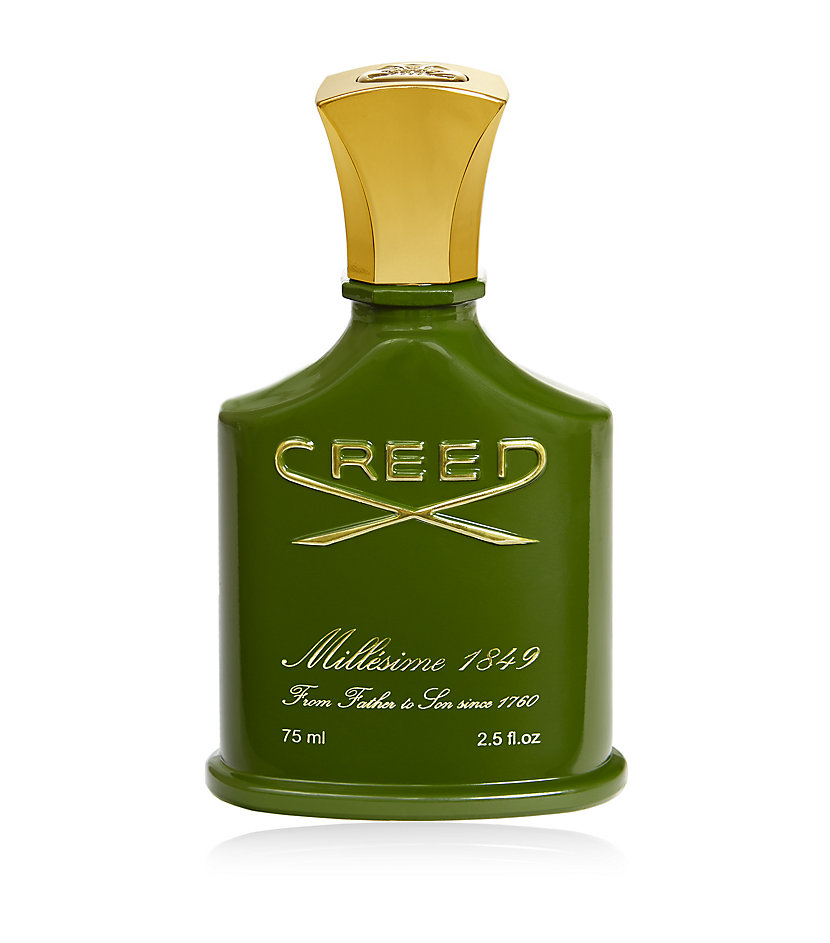
CREED’s latest offering is Millesime 1849, a perfume that has been launched to commemorate the birth date of London’s premiere shopping destination Harrods – a place that is as much as tourist attraction as it is a department store. Millesime 1849 aims to capture the spirit of one of London’s most famous addresses and the “imperial epoch which inspires its name, as well as the glorious reign of Victoria”.
Le Labo is one of those brands that I’ve only really had a passing interest in. On the one hand they appear to create, for the most part, good quality scents with more than your usual level of artistry (let’s face it, there are so many niche houses that don’t), whilst on the other they’ve always seemed a tad gimmicky for my tastes.
Maybe I’m just being a grump, but there’s something about their industrial aesthetic, the odd naming system (the name of the most prominent ingredient followed by the number of ingredients) and the ‘blended on the spot’ approach that narks me, almost as if they are trying just a little bit too hard to be ‘hip’. Still, none of that should get in the way of the fact that the majority of their output is solid, wearable and interesting.
This summer the brand has launched two florals – Lys 41 and Ylang 49 – a duo that they are calling “the imperfect twins”. Working with perfumers Frank Voekly (Ylang 49) and Daphné Bugey over the last three years, Le Labo have created “two new floral statements” that are likely to surprise, ensnare and entertain many a perfume-lover.
There are some niche brands out there that just get it – they know how to offer interesting, well-crafted perfumes that are both easily wearable and suitably intellectually stimulating. Maison Francis Kurkdjian is one of such brand, and having thoroughly explored each and every corner of this ‘maison’ I can honestly say that I’m yet to come across a single dud.
This, of course, is no surprise seeing as the patriarch of the Maison is none other than venerable perfume Francis Kurkdjian. At a recent Perfume Lovers London event Kurkdjian said that it’s the stories behind the scents that make them what they are, musing that Shalimar wouldn’t be Shalimar without its name and that scents cannot me detached from the names they are bestowed. Perhaps this is why his brand is so enjoyable – each scent tells a story.
“It was one afternoon on Formentera, in the Balearic Islands, that the idea of Aqua Vitae came to Francis Kurkdjian. Riding an old motorbike, taking it slowly in view of the extreme heat, the air on his face was deliciously cool. The sun intensified the fragrances of nature around him. Aqua Vitae, the water of life, when life is quite simply beautiful, an extremely sensitive sensuality enveloped with an uncontained freshness.”
His latest perfume – Aqua Vitae – tells the story of “the space between us” and takes its name from the water of vitality. Created to evoke “a magic breath” and “the shiver of pleasure on the back of the neck before something wonderful occurs” Aqua Vitae is a fragrance that casts a beautiful golden light, exuding serenity and peace.
Perfumers and brands can take their inspiration from a wide variety of mediums when creating a perfume: music, nature, people, memories, places and food; just to name a small few. As perfume lovers we welcome a wealth of muses – after all it’s always interesting to see perfumes based on new and exciting things rather than the usual set of notes and themes.
Penhaligon’s is a brand that seems to have a far reaching nose, in the sense that they like to seek out unusual inspirations and over the years have created a number of perfumes inspired by weird and wonderful things. Take their wonderful Sartorial for example, a fragrance that accurately captures the scent of a Saville Row tailor’s workroom or the equally-wonderful Juniper Sling, a perfect olfactory tribute to the quintessentially English drink of Gin.
For their latest offering, the brand has teamed up with English National Ballet to create a fragrance that captures the spirit of the ballet – a perfume that they describe as being “a work of olfactory choreography”. Having had exclusive access to dancers Nathan Young and Lauretta Summerscales, in addition to behind the scenes visits, perfumer Alberto Morillas has created a beautiful ode to the most graceful of dances.
Hothouse Flowers by Steven Klein for Vogue January 2013
It surprises me that this is my first review of a Byredo perfume. I haven’t tried everything they have to offer but most of what I have sampled has been well made, if not rather interesting (it’s hard to ignore the genius of the tinsel-esque M/Mink and Solero-esque Pulp). Still, my laziness as a blogger has resulted in the brand not being featured and for that I shall have to give myself a large slap on the wrist.
That was until a sample of the latest Byredo fragrance – ‘Infloresence’ – arrived on my door step. They pretty much had me at the name, but it was the brand’s description of the scent that got me;
“to celebrate the beginning of spring, nature’s perennial and powerful rebirth, Ben Gorham (Founder and Creative Director of Byredo) envisaged a wild garden and a floral scent that would capture the strength and beauty of its blossoms, just as they reach their dramatic peak.”
It didn’t take much more than that to get me salivating! According to my good friend Wikipedia, inflorescence means; “a group or cluster of flowers arranged on a stem that is composed of a main branch or a complicated arrangement of branches” [1], and this is entirely in keeping with the fragrance’s theme of a bouquet of intensely aromatic flowers.
Alexander McQueen’s perfume line was both infamous and short lived. Perhaps better known for the erotically charged skank-bomb Kingdom than its other offerings, McQueen’s perfumes were nowhere near as successful as they were artistic or ultimately as they deserved to be.
Following in the same vein as his fashion output McQueen’s first perfume Kingdom was a renegade scent created to shock, however the second and final perfume from the brand – MyQueen – was something entirely different, opting to reference the subtle intricacies of the designer’s sculptural tailoring rather than courting the realms of controversy.
Created in 2005 by perfumers Anne Flipo (Ananas Fizz, La Chasse aux Papillons & Donna Karan Woman) and Dominique Ropion (Carnal Flower, Alien & Portrait of a Lady) MyQueen was created to represent the McQueen woman – “a vision of the woman of his (McQueen’s) dreams” – with the kaleidoscopic bottle representing not only the many facets of this woman but also McQueen’s love for antique glass.





 The Candy Perfume Boy